Periodontitis is one of the most common issues we deal with here at Sydney Periodontists.
Around 30% of adults aged 45-64 in Australia suffer from moderate to severe periodontitis, which often starts as gingivitis.
As gum specialists in Sydney, we provide advanced periodontal care using research-backed techniques in the management of gum diseases. We believe that everyone deserves a stable, healthy smile, and that starts with healthy gums.
One of the most important things you need to know about periodontitis is that the earlier you seek treatment, the better.
Understanding the staging and grading of periodontitis is an important part of knowing when to seek treatment.
This is because the first stage of periodontal disease (gingivitis) is much easier to treat than the later stages of periodontal disease (advanced periodontitis).
For this reason, recognising the earliest stages of periodontal disease can have a significant impact on the kind of treatment you will need, and the outcome.
What is periodontitis?
Periodontitis is a serious gum disease that happens when plaque and bacteria build up on your teeth and gums, causing inflammation.
There are 4 stages of periodontal disease— starting with gingivitis, which is a mild form of gum disease, and if left untreated, may progress to periodontitis.
With Periodontitis, the infection starts to affect the bone that supports your teeth, causing the the loss of bone around your teeth.
You may notice your gums bleeding when brushing, your teeth feeling loose, or even bad breath that just won’t go away.
At the most advanced stage of periodontal disease, your teeth can feel sensitive or loose.
In severe cases, periodontitis may lead to tooth loss.
What are the stages of periodontitis?
Stage 1 : Gingivitis
Around 80% of the adult population will suffer from gingivitis.
Plaque is the sole cause for periodontal diseases including gingivitis.
Plaque will always form on teeth, crowns, bridges, dental implants, dentures, gums, tongue and when not properly removed, it accumulates at the gum line, causing inflammation the gums.
This leads to red, swollen gums and bleeding when brushing or flossing.
When it comes to the stages and grades of periodontal disease, gingivitis is reversible with early intervention. If you suspect you have it, you should contact Sydney Periodontists to prevent progression.
Stage 2 : Early periodontitis
Early periodontitis may occur with untreated gingivitis and is characterised by damage beneath the gum line.
In this stage, the bone structure supporting the teeth begins to degrade, although the symptoms above the gum line may still appear similar to gingivitis—red, swollen gums with possible bleeding.
The difference is that, at this stage, the damage to the supporting bone is already occurring.
Stage 3 : Moderate periodontitis
Moderate periodontitis is when gum disease becomes more serious.
Bone loss continues, and more gum tissue is destroyed, which may mean teeth becoming loose.
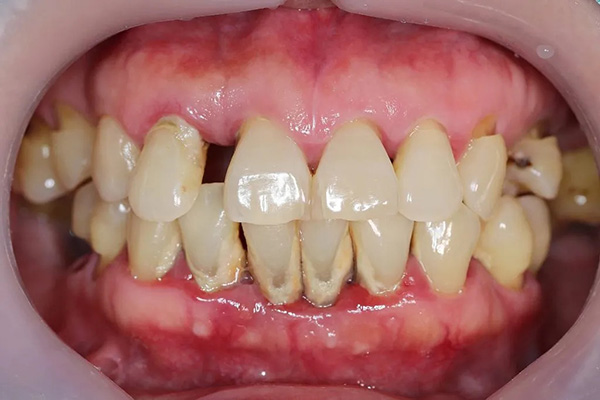
The symptoms are often more noticeable, with gums receding and pockets of infection forming around the teeth.
This stage requires more intensive dental treatment to manage the infection and prevent further damage.
Stage 4 : Advanced periodontitis
At this final staging of periodontal disease, the destruction of both bone and gum tissue is extensive.
Teeth may become severely loose, and biting or chewing can be painful.
Periodontitis, if untreated, is the leading cause of tooth loss in adults, with severe cases affecting roughly 5% of the adult population.
Advanced periodontitis requires extensive dental care, which may include debridement, surgery, or tooth extraction. It’s critical to address this stage immediately to prevent tooth loss.
Symptoms of advanced periodontitis
By this point, the symptoms are usually much more noticeable and uncomfortable, including :
- Severe gum recession : Your gums may pull back significantly from your teeth, exposing the tooth roots and possibly making your teeth appear longer than usual.
- Loose or shifting teeth : As the bone and tissues that support your teeth continue to degrade, you may feel that your teeth are loose or shifting in your mouth.
- Severe discomfort : Unlike earlier stages of gum disease, advanced periodontitis may cause significant pain, especially when chewing or touching your teeth.
- Halitosis : At this stage, bad breath becomes more persistent, and the smell can be much more unpleasant due to the infection deep in the gums.
- Pus around the teeth or gums : Pus may begin to drain from the pockets around your teeth and gums.
- Gum bleeding : Gums may bleed more easily, even without brushing or flossing, and may continue to be swollen and tender.
A closer look at the different stages of periodontal disease
| Stage | Key Features | Symptoms | Treatment Needed |
| Stage 1: Gingivitis | Plaque buildup causes gum irritation but no permanent damage yet. | Red, swollen gums; bleeding when brushing/flossing | Professional cleaning, improved oral hygiene |
| Stage 2: Early Periodontitis | Infection moves deeper into gums, affecting the supporting bone | Swollen gums, bleeding; slight gum recession | Dental cleaning, possibly Debridement(scaling and root planing) |
| Stage 3: Moderate Periodontitis | Bone loss increases, gum tissue starts to break down | Loose teeth, gum recession, bad breath | Debridement (Scaling and root planing). Possible surgery |
| Stage 4: Advanced Periodontitis | Severe damage to bone and gum tissue, teeth may become loose | Extreme gum recession, loose teeth, severe pain | Debridement, possible Surgery, tooth extraction, bone grafting |
Professional dental treatments for treating periodontitis
If periodontitis has progressed, leading to bone loss or deep gum pockets, Sydney Periodontists can help. There are a number of options for periodontal regenerative surgery.
– Osseous surgery
The periodontist makes an incision along your gum line to lift the gums temporarily.
By lifting the gums, the dentist can thoroughly clean out the plaque, tartar, and bacteria that have accumulated below the gum line.
Your periodontist may also smooth the bone around the roots, which can help stabilise the bone structure and prevent further bone loss.
– Dental bone grafts
A dental bone graft is a procedure where bone material is placed in areas where bone loss has occurred.
The graft material, which can be from a donor, synthetic material, or your own body, encourages new bone growth and helps rebuild the jawbone.
This process is crucial for patients who may need dental implants later on, as a stable jawbone is needed to support implants.
– Gum grafts
A gum graft is a surgical procedure where tissue from another part of your mouth (or sometimes a donor source) is used to cover areas of exposed tooth roots due to gum recession.
This reduces sensitivity and restores the appearance of the gums.
How to prevent periodontitis progression
We all want healthy teeth, and that starts with healthy gums.
The most important thing you can do to prevent the progression of periodontitis is to see a dentist at the first indication of gingivitis.
With or without signs of gingivitis, you should also be getting a dental check-up every 6–12 months.
Your dentist can catch early signs of gum disease, often before you have any symptoms.
You should be especially vigilant if you have any of the following risk factors :
- Smoking or tobacco use or a vaper
- Poor oral hygiene
- Diabetes
- Family history of gum disease
- Medications that dry out the mouth
- Hormonal changes (including pregnancy and menopause)
- Bruxism (teeth grinding)
- Age (over 45)
The second most important thing you can do to prevent periodontitis progression is maintain healthy dental habits.
- Make it a habit to brush your teeth at least twice a day—morning and night using fluoride toothpaste. Don’t forget to brush your tongue too.
- Floss daily to get rid of food particles and plaque stuck between your teeth.
- Eat a balanced diet, including foods rich in vitamins, especially Vitamin C, and avoid smoking.
- Stay hydrated, to wash away food particles and bacteria in your mouth. Drinking plenty of water also keeps your mouth moist, which prevents plaque buildup.
How Sydney Periodontists can help
Have you noticed warning signs like bleeding gums, bad breath, or swollen gums?
When it comes to periodontitis, early treatment is key.
Led by Dr. Vijay Tumuluri with 25+ years of experience, Sydney Periodontists delivers the highest quality, affordable gum care using research-backed techniques.
As a periodontist in Parramatta, Sydney CBD, Burwood, and Orange, we are proud to provide outstanding care to our patients, helping them return to full oral health quickly and effectively.